


Wired for Worry: The Gendered Brain in a Gendered World
- Cecelia Ky-Lan Do
- Dec 5, 2025
- 14 min read

by Noa Yaniv
art by Anjali Jawa

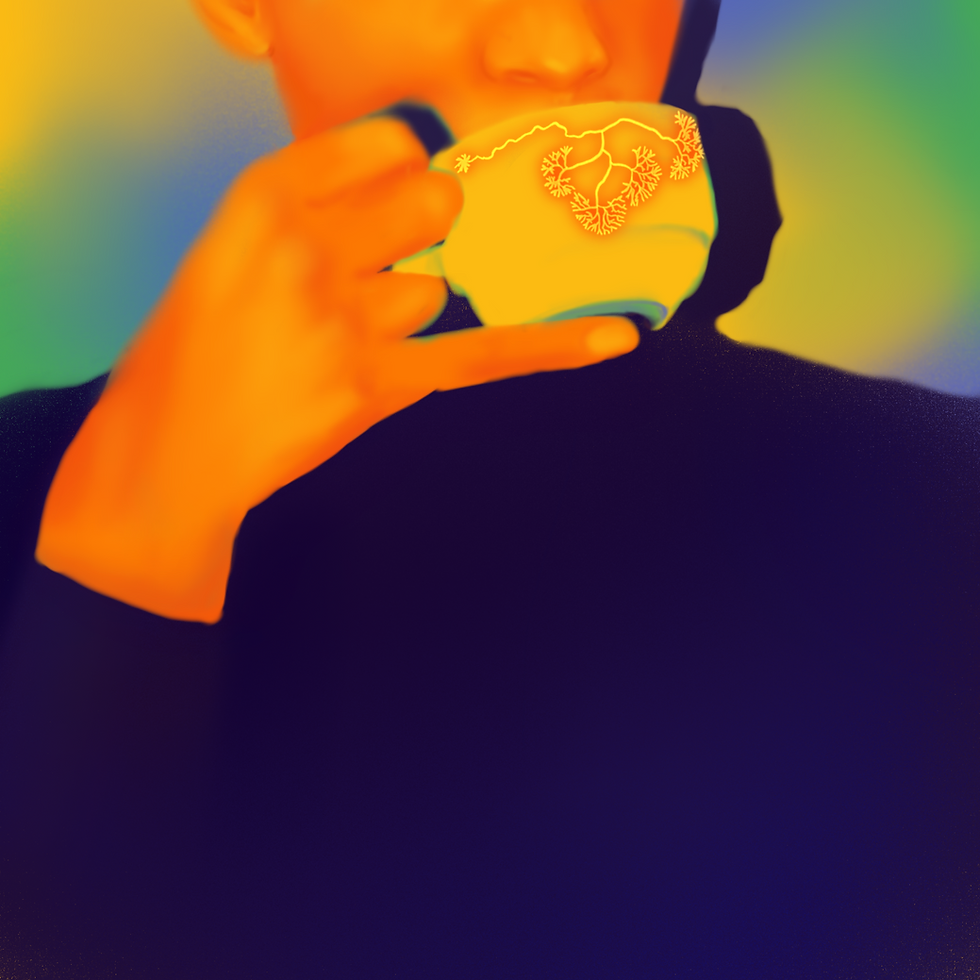
I met the amygdala on a sunny Monday afternoon at a crowded Joe’s Coffee. Small, almond-shaped, and a bit on edge (noticeably buzzing with nerves), it immediately knew the topic I was going to bring up, blurting out: “Listen, I’m just trying to keep women safe. Honestly, I might be overdoing it.” The amygdala is a key brain structure that detects threats and helps regulate fear and emotional responses, essentially acting as an alarm system for the body.
Epidemiological studies consistently show that women are about twice as likely as men to experience anxiety disorders, with these disparities appearing as early as childhood. By age 6, girls are already twice as likely as boys to have experienced an anxiety disorder, and this trend continues through adolescence [1]. Cultural expectations and social reinforcement of women magnify a vulnerability that stems from genetics, hormones, and neural circuitry, creating a heightened sensitivity to stress [1]. By considering both the biological foundations along with the social amplifiers of women's anxiety, we can begin to understand why this mental health burden falls so disproportionately on them.
So what exactly drives the disparity in anxiety rates between males and females? Is it hormones, brain wiring, or societal expectations? Anxiety disorder affects women nearly twice as often as men, but the reasons why aren’t just chemical or hormonal—they’re also social [2]. With anxiety rates at an all-time high, I decided to go straight to the source to unpack this messy reality: the amygdala itself [3]. Over an almond milk latte, the amygdala began to explain, “I’ve been accused of being the sole reason that women feel too anxious, but I’m not the only one to blame.” The amygdala was right. Women’s higher rates of anxiety are often explained away as overreaction or “hysteria,” but neuroscience tells a different story: the female brain is wired to process emotion and stress more deeply, while society continues to misread this biological sensitivity as weakness rather than difference [4, 5].
The science of why women's brains are more vulnerable Let's start from the beginning. What is the amygdala, and what does it do? The amygdala, a small structure in the temporal lobe, plays a central role in processing emotional responses and forming emotional memories [2, 5]. You can think of the amygdala as the brain’s smoke alarm: small, fast, and designed to keep us safe. Research suggests that in women, all throughout life, this alarm tends to be more sensitive and shows stronger connectivity with the hippocampus (the brain's memory center), particularly during emotionally-charged experiences [6, 7]. More recently, a resting-state functional connectivity study found that women exhibited significantly stronger coupling between the left amygdala and the hippocampus than men, suggesting that even at rest this limbic circuit, which is the brain's emotional network, may be more tightly coordinated in women [8]. So, in women, this is connected directly to the memory system [2, 5]. This makes emotional experiences both harder to forget and more overwhelming.
The amygdala has two hemispheres, which support different functions. The right amygdala reacts quickly to any new or dynamic emotional stimuli, and is linked to short-term, immediate emotional reactions. So if your friend ever scares you, that immediate reaction of fear is your right amygdala acting up [9]. The left amygdala, however, is more involved in sustained evaluation and interpretation of emotions, meaning it processes emotions more slowly and analytically [2, 5]. So if you’ve ever felt sad all day after not doing well on an exam, that lingering sadness isn’t because the amygdala is “slow,” but rather because the prefrontal cortex, which normally helps regulate emotional responses, hasn’t fully done its job. That prolonged sadness or emotional signal? That's your left amygdala working. Supporting this, a 2014 study showed that the enhanced coupling between the left amygdala and the ventromedial prefrontal cortex (vmPFC)—-the emotional steering wheel of your brain—can serve as a vulnerability marker for developing anxiety disorders. The vmPFC helps you make emotion-based decisions through making connections between feelings, values, and social understanding to your choices [10].
More recent research has also shown that this connection may function differently across genders. In women, higher cortisol levels are associated with stronger connectivity between the amygdala and limbic regions, amplifying emotional responses under stress. Here, “emotional responses” refer to measurable changes in both physiological and behavioral indicators of stress, such as increased heart rate, self-reported feelings of anxiety or fear. In contrast, men show stronger links between cortisol and prefrontal regions that are involved in cognitive control and emotion regulation. This suggests that women's stress responses seem to rely more on emotion-driven circuits, potentially explaining why they are often more vulnerable to anxiety-related disorders [8]. This is all consistent with the sex differences in emotional processing lateralization—meaning that the two sides of your brain handle emotions differently—where the left amygdala was found to be more active in women [11].
Neuroimaging studies showing brain activity in real time consistently show sex differences in amygdala function: women tend to rely more on the left amygdala to encode emotional memories, while men rely more on the right side [12]. To visualize these changes, scientists used positron emission tomography (PET), which uses a radioactive tracer that is typically injected into the body, and functional magnetic resonance imaging (fMRI), which tracks blood flow to different parts of the brain. Using these methods, scientists showed how amygdala activity changed when participants viewed emotionally arousing films or photographs. The study found that women's memory performance correlated with activation in the left amygdala, whereas men’s correlated with the right [2]. This difference essentially means that in women, the same hemisphere that responds to emotional arousal also encodes the memory of that event, which leads to stronger and more vivid memories.
These differences in how women's brains store emotional memories help explain why they feel emotions more strongly, and these responses can change throughout the menstrual cycle because of hormone fluctuations. Neuroimaging research has shown that women display heightened amygdala activation during fear and anxiety-inducing tasks. These fluctuations occur across the menstrual cycle, at which point changing estradiol levels—a specific type of estrogen and key gonadal steroid— affect the intensity of symptoms [13]. The gonads are the dominant reproductive organs, and are the testes in the male body and the ovaries in the female [14]. A gonadal steroid is a sex steroid and is an umbrella term for hormones produced by the gonads, which include progesterone, androgens (also known as testosterone), estrogen, and estradiol [15]. The gonadal steroid is central in regulating the menstrual cycle, and with higher estradiol levels comes reduced neural and emotional responses to stress. Research has found that lower estradiol levels are correlated with stress activity and emotional slumps. During a woman's menstrual cycle, when estradiol is low, their alarm system becomes more reactive. This heightened reactivity amplifies emotional responses and explains why anxiety intensifies during this time [15].
Hormonal influences, such as estrogen and progesterone, only further contribute to women's susceptibility to anxiety. Estrogen (which influences mood and stress responses) and progesterone (which helps regulate mood and stress reactivity) both play key roles in controlling stress, emotional reactivity, and fear extinction [16]. In addition to these hormonal effects, differences in the hypothalamic-pituitary-adrenal (HPA) axis—the body's main stress response system that controls the cortisol system—play an important role. Unlike the sympathetic nervous system, which is in charge of immediate “fight or flight” reactions, the HPA axis is in charge of managing long-term stress regulation [16]. Because women show stronger cortisol responses to stress, they have a higher chance of feeling continued psychological arousal [17]. These biological factors intersect with gender differences in emotional processing. Evidence shows that while men and women recall negative memories with similar frequency, women react more intently to these memories. Staugaard and Bernsten (2021) found that women rated experimentally induced negative memories as more emotionally intense and more arousing, and experienced larger increases in state anxiety following recall [18]. This means that women are not exposed to more negative memories, but are rather more biologically reactive to them, especially in periods when hormones sensitize the stress system.
This enhanced reactivity helps explain why women show greater rates of comorbidity across internalizing disorders. Recent findings indicate that women's elevated risk for anxiety, depression, and trauma-related disorders stems largely from biological and psychosocial factors, rather than social exposure alone, with internalizing tendencies reinforcing shared vulnerabilities across conditions [19]. Interestingly, the same study found that masculinity-related traits, such as assertiveness and goal-directed behavior, serve as protective factors against anxiety, which may help in explaining gender gaps in prevalence. Together, these hormonal, neural and psychological processes create a persistent pattern of heightened vulnerability across women's lifespan. As a result, women are also more likely to develop co-existing conditions, such as depression, post -traumatic stress disorder, or eating disorders [19].
"Why the Same Pill Works Differently in Women"
As I came back to the table with a chocolate chip cookie for us to split, the amygdala anxiously leaned in across the table, lowering its voice. “And don’t even get me started on medication,” it said, rolling its eyes. “Doctors keep prescribing the same pills, but women’s bodies don't handle them like men’s.”

Although women are nearly twice as likely as men to suffer from anxiety disorders, almost all preclinical drug research has been administered on male rodents, which overlooks critical sex differences in hormonal cycles, stress reactivity, and fear regulation [20, 21]. This means that the typical treatments for anxiety, like benzodiazepines, tricyclic antidepressants (TCAs), and selective serotonin reuptake inhibitors (SSRIs), don’t work the same way in women [21]. To put this into context, let's briefly define what these medications actually do. Benzodiazepines are fast-acting medications that calm the brain by boosting the effects of gamma-aminobutyric acid, also known as GABA. GABA, a neurotransmitter, acts like a brake in the nervous system to slow down nerve transmission and stop neurons from firing excessively. SSRIs, unlike benzodiazepines, which are typically used for short-term relief, are prescribed for long-term anxiety and work by increasing serotonin, a key chemical for mood regulation. Finally, TCAs affect both serotonin and norepinephrine, which are also neurotransmitters—chemicals that signal molecules in the brain—that are linked to mood and stress.
So why is it that these drugs don’t work the same way in women? The reasons are physiological. Women differ from men in two key ways. First, in pharmacokinetics, their bodies absorb, metabolize, and eliminate drugs differently. Second, in pharmacodynamics, drugs affect the brain and the symptoms that come with it differently [22]. For example, women produce less stomach acid and empty solids more slowly, which delays drug absorption. So it's not just what medicine you take, but how your body's kitchen cooks it. Additionally, hormones like progesterone and estradiol further change digestion and metabolism because of enzymes such as CYP3A4, a digestive enzyme present in the stomach, which is more active in women. This leads to a fast breakdown of certain drugs, such as alprazolam (Xanax) and diazepam (Valium), both common benzodiazepines used to treat anxiety [23].
Essentially, the effects of medication, such as their strength, duration, and side effects, can be unpredictable—especially due to a lack of research [22]. Studies have also shown that women often have higher plasma concentrations of antidepressants, like SSRIs, meaning that the same dose can hit women harder as it remains longer in their plasma, which only raises more questions regarding the effectiveness and risk of side effects for women. These biological differences intersect with psychosocial realities: from childhood, girls are socialized to be more cautious, risk-averse, and appearance-focused, which only reinforces anxious tendencies [24, 25]. Supporting this, recent research has found that parents own gender-typical appearance strongly predicts a more gender-typical appearance in their daughters- but not their sons- highlighting how parents play a more active role in shaping a female child's external presentation from a young age [25]. Combined with daily sexism, microaggressions, and higher rates of trauma exposure, and the connection becomes clear: women are not only more vulnerable to anxiety biologically, but have every social aspect working against them.
The amygdala finished up its chocolate chip cookie and took a deep breath. “See, it's not just me, the whole system is stacked against women.”
Anxiety Throughout Life Stages for Women
Anxiety in women follows a distinct developmental trajectory, reflecting the interaction between hormonal changes and the shifting social demands across the lifespan. During puberty, research has shown that girls face a sudden spike in risk for anxiety disorders, driven by both hormonal surges and new social stressors [26]. This creates the perfect storm for the amygdala to stay on high alert in women—a combination of fluctuating hormones with intensified social expectations regarding their appearance, responsibilities, and growing social pressures [27].
Anxiety continues to fluctuate throughout the menstrual cycle, typically peaking in the luteal phase, which is right before menstruation, and escalating in the perinatal and postpartum period. In postpartum, there is a sudden drop in estrogen, which completely destabilizes the stress circuits. For example, a large study of 820 women found a substantial prevalence of postpartum anxiety: over one third reported mild anxiety, with moderate to severe anxiety present in a smaller but significant minority [28]. Key risk factors included a history of mental health issues, low income, poor mother-baby bonding, and infant health concerns. These findings reinforce that postpartum anxiety cannot simply be attributed to hormone changes alone- it also reflects broader psychosocial stressors and life-stage demands [28]. A community based study likewise showed that the rates of anxiety rose from 8.7 percent at 14 weeks to 16.8 percent at 30 weeks [29] and overall remained at an elevated risk for anxiety up to seven months after childbirth [30].
While some women experience relief from anxiety after hormones stabilize during menopause, research shows that the menopausal transition itself can significantly increase vulnerability to anxiety. A 2023 study found that menopause is largely linked to developing both depression and anxiety, largely as a result of fluctuations and eventual declines in estrogen that disrupt the neural systems that regulate mood and stress [31]. Estrogen's role is typically proactive, as it buffers amygdala reactivity, so when its levels drop sharply (as they do in menopause), the amygdala is left essentially unprotected. This, combined with the emotional challenges many women face during midlife, makes the menopausal transition yet another stage where the amygdala remains especially active [31]. Additionally, estrogen plays an important role in menopause for women, acting on the brain through estrogen receptors, which are especially dense in emotional regulation areas like the amygdala, hippocampus, and prefrontal cortex [32]. During menopause, the estrogen levels drop drastically, but more importantly, the estrogen receptor availability changes, which means that the brain's ability to receive estrogen's calming effect weakens [32]. With estrogen having a typically proactive role, buffering the amygdala’s reactivity, the amygdala is essentially left unprotected, with its levels dropping sharply as they do in menopause [32].

What I thought was going to be a simple coffee afternoon chat with an old friend actually revealed to me a shocking truth: women's anxiety is not a simple matter of biology or culture, but due to the way these forces interact and amplify one another. Across the lifespan, from puberty to postpartum to menopause, shifts in estrogen and progesterone shape the amygdala's sensitivity, through heightening the impact of social expectations, gendered stress and cultural presses, creating a burden that is far greater than any single factor could produce on its own.. Taking into account that treatments are designed around male bodies and that research continues to ignore women's unique vulnerabilities to anxiety, it becomes clear why women still experience nearly double the rates of anxiety. To address this burden, interventions must focus on the full picture: not only on the brain circuits and hormones that leave women more vulnerable, but also on the societal system that reinforces fear and anxiety. As I shook the amygdala's hand, thanking it for its time and saying my goodbyes, it gave me a tired smile. “I can’t change on my own,” it said almost tearfully. The problem isn’t the amygdala's alarm; it's the fire all around it. It's important to work to not silence the amygdala, but to reshape the systems around it so that it no longer needs to sound so loudly to keep women feeling safe.
REFERENCES:
Solmi, M., Radua, J., Olivola, M., Croce, E., Soardo, L., Salazar de Pablo, G., … Fusar-Poli, P. (2022). Age at onset of mental disorders worldwide: large-scale meta-analysis of 192 epidemiological studies. Molecular Psychiatry, 27(1), 281–295. https://doi.org/10.1038/s41380-021-01161-7
Hamann, S. (2005). Sex Differences in the Responses of the Human Amygdala. The Neuroscientist, 11(4), 288–293. https://doi.org/10.1177/1073858404271981
American Adults Express Increasing Anxiousness in Annual Poll; Stress and Sleep are Key Factors Imp. (2024, May 1). American Psychiatric Association. Retrieved November 21, 2025, from https://www.psychiatry.org:443/news-room/news-releases/annual-poll-adults-express-increasing-anxiousness
Zirnsak, T., Elwyn, R., McLoughlan, G., Le Couteur, E., Green, C., Hill, N., … Maylea, C. (2024). “I have to fight for them to investigate things”: a qualitative exploration of physical and mental healthcare for women diagnosed with mental illness. Frontiers in Public Health, 12, 1360561. https://doi.org/10.3389/fpubh.2024.1360561
Bürger, Z., Müller, V. I., Hoffstaedter, F., Habel, U., Gur, R. C., Windischberger, C., … Kogler, L. (2023). Stressor-Specific Sex Differences in Amygdala–Frontal Cortex Networks. Journal of Clinical Medicine, 12(3), 865. https://doi.org/10.3390/jcm12030865
Canli, T., Desmond, J. E., Zhao, Z., & Gabrieli, J. D. E. (2002). Sex differences in the neural basis of emotional memories. Proceedings of the National Academy of Sciences, 99(16), 10789–10794. https://doi.org/10.1073/pnas.162356599
Kogler, L., Müller, V. I., Seidel, E.-M., Boubela, R., Kalcher, K., Moser, E., … Derntl, B. (2016). Sex differences in the functional connectivity of the amygdalae in association with cortisol. NeuroImage, 134, 410–423. https://doi.org/10.1016/j.neuroimage.2016.03.064
Kogler, L., Müller, V. I., Seidel, E.-M., Boubela, R., Kalcher, K., Moser, E., … Derntl, B. (2016). Sex differences in the functional connectivity of the amygdalae in association with cortisol. NeuroImage, 134, 410–423. https://doi.org/10.1016/j.neuroimage.2016.03.064
Xie, T., van Rooij, S. J. H., Inman, C. S., Wang, S., Brunner, P., & Willie, J. T. (2025). The case for hemispheric lateralization of the human amygdala in fear processing. Molecular Psychiatry, 30(5), 2252–2259. https://doi.org/10.1038/s41380-025-02940-2
Hamm, L. L., Jacobs, R. H., Johnson, M. W., Fitzgerald, D. A., Fitzgerald, K. D., Langenecker, S. A., … Phan, K. L. (2014). Aberrant amygdala functional connectivity at rest in pediatric anxiety disorders. Biology of Mood & Anxiety Disorders, 4(1), 15. https://doi.org/10.1186/s13587-014-0015-4
Baeken, C., Marinazzo, D., Van Schuerbeek, P., Wu, G.-R., De Mey, J., Luypaert, R., & De Raedt, R. (2014). Left and Right Amygdala - Mediofrontal Cortical Functional Connectivity Is Differentially Modulated by Harm Avoidance. PLoS ONE, 9(4), e95740. https://doi.org/10.1371/journal.pone.0095740
Hamann, S., Herman, R. A., Nolan, C. L., & Wallen, K. (2004). Men and women differ in amygdala response to visual sexual stimuli. Nature Neuroscience, 7(4), 411–416. https://doi.org/10.1038/nn1208
Gordon, J. L., Peltier, A., Grummisch, J. A., & Sykes Tottenham, L. (2019). Estradiol Fluctuation, Sensitivity to Stress, and Depressive Symptoms in the Menopause Transition: A Pilot Study. Frontiers in Psychology, 10. https://doi.org/10.3389/fpsyg.2019.01319
Moini, J., Badolato, C., & Ahangari, R. (2020). Endocrine Glands. In Epidemiology of Endocrine Tumors (pp. 3–28). Elsevier. https://doi.org/10.1016/B978-0-12-822187-7.00014-1
Albert, K., Pruessner, J., & Newhouse, P. (2015). Estradiol levels modulate brain activity and negative responses to psychosocial stress across the menstrual cycle. Psychoneuroendocrinology, 59, 14–24. https://doi.org/10.1016/j.psyneuen.2015.04.022
Brydges, N. M., Best, C., & Thomas, K. L. (2020). Female HPA axis displays heightened sensitivity to pre-pubertal stress. Stress, 23(2), 190–200. https://doi.org/10.1080/10253890.2019.1658738
Maeng, L. Y., & Milad, M. R. (2015). Sex differences in anxiety disorders: Interactions between fear, stress, and gonadal hormones. Hormones and Behavior, 76, 106–117. https://doi.org/10.1016/j.yhbeh.2015.04.002
Staugaard, S. R., & Berntsen, D. (2021). Gender differences in the experienced emotional intensity of experimentally induced memories of negative scenes. Psychological Research, 85(4), 1732–1747. https://doi.org/10.1007/s00426-020-01334-z
Farhane-Medina, N. Z., Luque, B., Tabernero, C., & Castillo-Mayén, R. (2022). Factors associated with gender and sex differences in anxiety prevalence and comorbidity: A systematic review. Science Progress, 105(4), 00368504221135469. https://doi.org/10.1177/00368504221135469
Karp, N. A., & Reavey, N. (2019). Sex bias in preclinical research and an exploration of how to change the status quo. British Journal of Pharmacology, 176(21), 4107–4118. https://doi.org/10.1111/bph.14539
Woitowich, N. C., Beery, A., & Woodruff, T. (2020). A 10-year follow-up study of sex inclusion in the biological sciences. eLife, 9, e56344. https://doi.org/10.7554/eLife.56344
Zucker, I., & Prendergast, B. J. (2020). Sex differences in pharmacokinetics predict adverse drug reactions in women. Biology of Sex Differences, 11(1), 32. https://doi.org/10.1186/s13293-020-00308-5
Khatri, R., Kulick, N., Rementer, R. J. B., Fallon, J. K., Sykes, C., Schauer, A. P., … Lee, C. R. (2021). Pregnancy-Related Hormones Increase Nifedipine Metabolism in Human Hepatocytes by Inducing CYP3A4 Expression. Journal of Pharmaceutical Sciences, 110(1), 412–421. https://doi.org/10.1016/j.xphs.2020.09.013
Dawson, C. (2023). Gender differences in optimism, loss aversion and attitudes towards risk. British Journal of Psychology (London, England: 1953), 114(4), 928–944. https://doi.org/10.1111/bjop.12668
Endendijk, J. J., Antoniucci, C., Chadwick-Brown, F., Halim, M. L. D., & Portengen, C. M. (2024). Gender-Typical Appearance in Early Childhood: Role of Parental Gender-Typical Appearance and Children’s Gender Similarity. Sex Roles, 90(7), 923–937. https://doi.org/10.1007/s11199-024-01484-z
Boivin, J. R., Piekarski, D. J., Wahlberg, J. K., & Wilbrecht, L. (2017). Age, sex, and gonadal hormones differently influence anxiety- and depression-related behavior during puberty in mice. Psychoneuroendocrinology, 85, 78–87. https://doi.org/10.1016/j.psyneuen.2017.08.009
Pfeifer, J. H., & Allen, N. B. (2021). Puberty Initiates Cascading Relationships Between Neurodevelopmental, Social, and Internalizing Processes Across Adolescence. Biological Psychiatry, 89(2), 99–108. https://doi.org/10.1016/j.biopsych.2020.09.002
Ogallar, M. A. D., Martínez Vázquez, S., Martínez, A. H., Peinado Molina, R. A., & Martínez Galiano, J. M. (2025). Prevalence and associated factors of anxiety in postpartum women. European Journal of Midwifery, 9, 10.18332/ejm/204308. https://doi.org/10.18332/ejm/204308
Howell, H. B., Brawman-Mintzer, O., Monnier, J., & Yonkers, K. A. (2001). Generalized Anxiety Disorder in Women. Psychiatric Clinics of North America, 24(1), 165–178. https://doi.org/10.1016/S0193-953X(05)70212-4
Ross, L., & McLean, L. (2006). Anxiety Disorders During Pregnancy and the Postpartum Period: A Systematic Review. Journal of Clinical Psychiatry, 67(8), 1285–1298.
Alblooshi, S., Taylor, M., & Gill, N. (2023). Does menopause elevate the risk for developing depression and anxiety? Results from a systematic review. Australasian Psychiatry, 31(2), 165–173. https://doi.org/10.1177/10398562231165439
Mosconi, L., Nerattini, M., Matthews, D. C., Jett, S., Andy, C., Williams, S., … Brinton, R. D. (2024). In vivo brain estrogen receptor density by neuroendocrine aging and relationships with cognition and symptomatology. Scientific Reports, 14(1), 12680. https://doi.org/10.1038/s41598-024-62820-


Comments